Creative expression
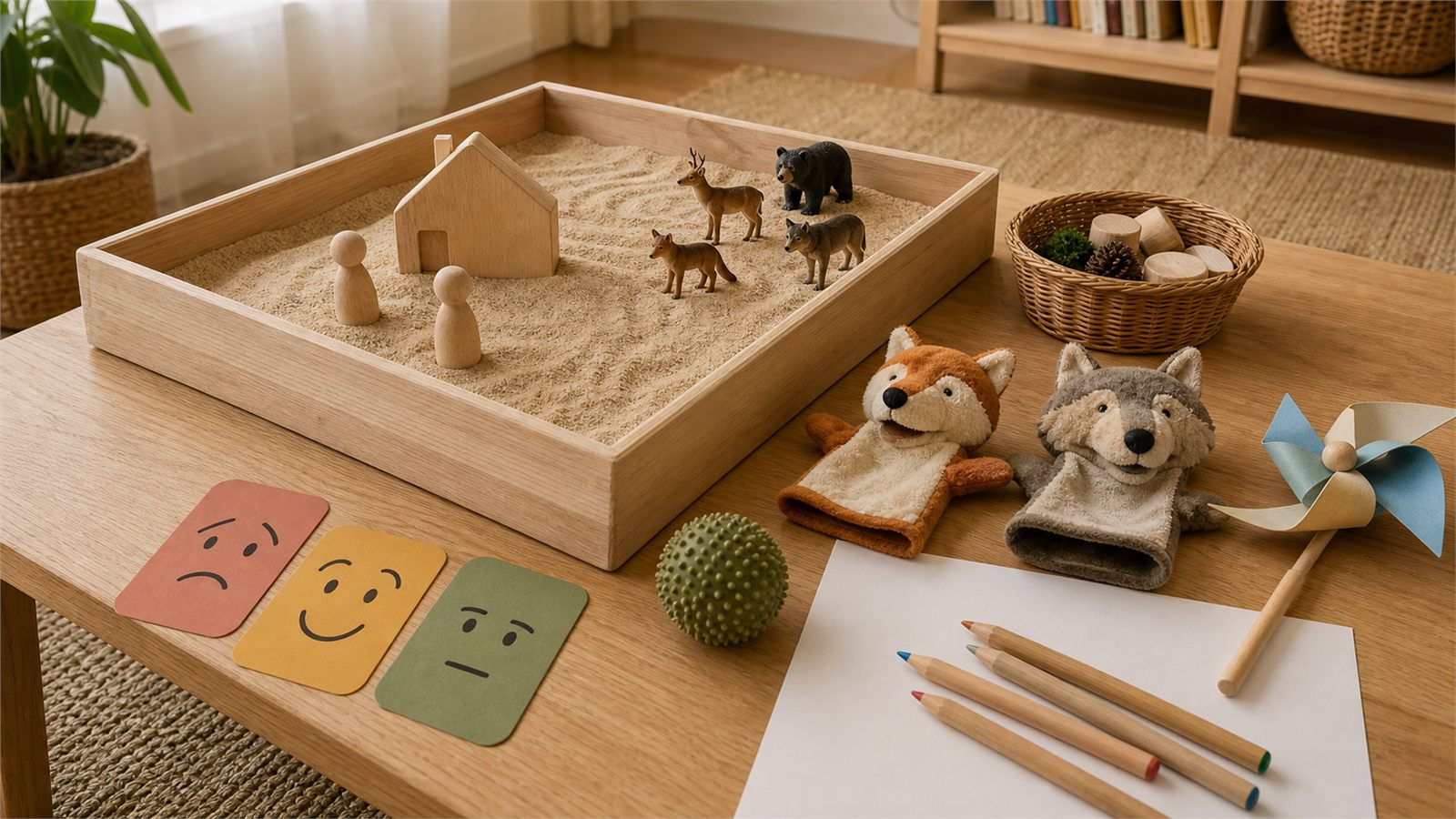
We may use story, drawing, movement, objects, emotion cards, and child-friendly conversation to help your child name what feels hard.
Play-informed support
If your child is struggling to explain worries, anger, grief, or other big feelings, we can use creativity, story, emotional language, and practical strategies to understand what they need.
Through play, children may express fear, worry, needs, conflict, imagination, and control. Together, we can use creative activities, story, movement, art, caregiver reflection, and child-friendly skill building in online care.
We can begin by looking at the meaning underneath your child's behaviour and finding responses that create more safety, structure, and connection at home.
Sessions may be held in English, Tamil, or both when useful. Learn about language and cultural context.
Together, we adapt the work to your child's age, attention, privacy, caregiver role, and what is clinically appropriate for your family.
We may use story, drawing, movement, objects, emotion cards, and child-friendly conversation to help your child name what feels hard.
We can practise grounding, calming, transitions, emotional language, and body-based coping tools with children and caregivers.
Together, we can connect behaviour with possible needs and bring practical strategies into daily routines at home.
We may consider play-informed support when your school-age child is navigating worry, meltdowns, shutdowns, school stress, grief, family change, ADHD-related challenges, or emotional regulation needs.
In a consultation, we can clarify whether child therapy, parent support, or another kind of care may be a safe and useful next step.
We consider privacy, safety, attention, caregiver availability, and your child's comfort with video sessions before deciding whether online care is appropriate.
Share what is happening in play, behaviour, school, sleep, transitions, or family routines, and we can explore whether child therapy, parent support, or a blended path may fit.